
Last updated October 16, 2026
 Water damage drying
 Fire & smoke cleanup
 Mold remediation
 Storm response
 Sewage cleanup
 Reconstruction
Free visual inspection and a written scope of work before any mitigation begins - photos, moisture readings, and drying logs go in your claim file
The scope we write is the scope we bill. Anything new gets shown to you, in writing, before we touch it.
Get your free estimateDamage Restoration Warning Signs: A Fort Worth Homeowner’s Reference Guide
Most Fort Worth homeowners believe water damage announces itself with a dramatic event: a burst pipe, a storm-driven leak, an overflowing washing machine. The truth is quieter and more expensive. The most costly water damage we see in Fort Worth homes develops over months, hidden inside wall cavities and under subfloors, producing no visible water and no obvious failure until the structural damage is already done. This guide teaches you to read the signals your house sends before those signals become a restoration bill measured in five figures.
Restoration work we handle
Quick Answer
The earliest signs of water damage in a Fort Worth home are often invisible at first glance: a musty odor that persists, doors that suddenly stick or won’t latch, paint that bubbles without visible moisture, and baseboards that pull away from the wall. Any one of these can indicate moisture trapped inside drywall cavities or under flooring long enough to support mold growth, which requires 24 to 48 hours of continuous wet conditions. If you notice a musty smell in a Fort Worth closet, treat it as a structural moisture problem, not a humidity issue.
Table of Contents
- The Seven Silent Signals Most Homeowners Misread
- What Your Nose Knows: Smell-Based Warnings Specific to Fort Worth
- Finding Hidden Moisture With a $20 Laser Thermometer
- Warning Signs That Are Contractor-Created, Not Water-Created
- Why Stopping at the Visible Wet Zone Leaves the Problem Unsolved
- How Fort Worth’s Climate Accelerates Hidden Water Damage
- Room-by-Room Warning Signs in Your Fort Worth Home
- Common Mistakes to Avoid
- When to Call a Professional
- Frequently Asked Questions
- The Bottom Line
The Seven Silent Signals Most Homeowners Misread
Fort Worth houses age in particular ways. The clay soil that defines much of Tarrant County expands and contracts with rainfall, and foundation movement is a reality most homeowners accept as normal. But some of what gets written off as “old house settling” is actually moisture working its way through drywall, wood, and insulation. Here are seven signs you have probably seen and dismissed, and what each actually tells you about where water is hiding.
1. Paint Bubbling or Peeling on Interior Walls
When paint bubbles on an interior wall, the moisture is not coming from humidity in the room. It is trapped behind or inside the drywall itself. The water vapor pushes against the paint film, creating blisters that eventually crack and peel. In Fort Worth, we see this most often on walls adjacent to bathrooms, beneath windows, and on ceiling corners below second-story plumbing. The key diagnostic: if the bubble feels damp or powdery when pressed, the moisture is active. If the bubble is dry and the drywall behind it crumbles, the leak has likely been present for months.
2. Baseboard Separation
Baseboards pull away from the wall for one of two reasons: foundation movement or swelling from moisture. You can tell the difference. Foundation movement shifts the entire baseboard uniformly, creating a gap that runs the length of a wall. Moisture swelling creates an uneven gap, wider at one end, often accompanied by a dark line of staining along the top edge of the baseboard. If the gap widens after rain, water is entering the wall cavity from outside, not from a plumbing leak.
3. Door Frames That Suddenly Won’t Close
A door that latched fine in January and sticks in July is not always foundation shift. Wood door frames absorb moisture and swell, even when the visible surface looks dry. If only one door in your Fort Worth home sticks while others operate normally, and especially if the sticking comes and goes with weather patterns, check for moisture in the wall around that door frame. This is a common early warning of a slow plumbing leak behind the frame or water intrusion from a compromised exterior seal.
4. Discolored Ceiling Spots That Appear and Fade
That faint yellow or brown spot on the ceiling that appears after heavy rain and fades when the weather clears? It is not cosmetic. It is a tide mark: the line where water has pooled, dried, and left mineral deposits behind. When it reappears, the water source is still active. In Fort Worth’s heavy spring storm season, these spots are often the first visible sign of a roof leak that has been present since the previous storm cycle.
5. Hardwood Floors That Cup or Crown
Wood floors respond to moisture with predictable behavior. Cupping, where the edges of boards rise higher than the center, means moisture is entering from below the floor. Crowning, where the center is higher, means moisture entered from above and was dried too quickly. Either condition in a Fort Worth home points to a subfloor moisture problem, not a humidity issue. If you notice the floor boards have begun to press against one another, eliminating the normal expansion gap, moisture is actively present.
6. Grout Lines That Crust or Darken
Tile and grout are not waterproof. Water that sits behind tile eventually works through the grout, carrying minerals and mold spores with it. When grout lines darken, crust, or develop white crystalline deposits despite regular cleaning, water is trapped behind the tile installation. This is especially common in Fort Worth homes with original mid-century bathrooms, where the waterproofing layer behind the tile has failed after decades of repeated wetting.
7. Wallpaper Edges That Curl in Specific Rooms
Wallpaper peels from corners and edges when the adhesive beneath it breaks down. High humidity can do this, but persistent curling in one room, especially a bedroom or hallway with no water source visible, often indicates moisture migrating through the wall from an adjacent bathroom or from a crawl space below. The pattern matters: curling at the bottom of the wall points to subfloor moisture; curling at the top points to a ceiling or roof leak.
What Your Nose Knows: Smell-Based Warnings Specific to Fort Worth
A musty smell in a Fort Worth closet is not a humidity problem. It is a structural moisture problem that has already been present long enough for microbial growth to begin producing a detectable odor, which requires a minimum of 24 to 48 hours of continuous wet conditions. Understanding what different smells indicate, and where they originate, helps you locate hidden damage before it spreads.
Fort Worth’s climate creates two distinct odor profiles that homeowners should learn to distinguish:
- Musty attic air smells dense, heavy, and slightly sweet, often with an earthy undertone. It points to roof leaks or inadequate attic ventilation trapping moisture from daily temperature swings. Fort Worth’s hot summers bake moisture out of the attic during the day, only to have it condense on the underside of the roof deck at night. Over time, this condensation supports mold growth on rafters and insulation, producing the characteristic musty odor.
- Musty crawl space air smells damp and mineral-like, similar to wet concrete or garden soil after rain. It points to ground moisture rising into the crawl space, often from poor drainage around the foundation. Many Fort Worth homes built before the 1980s have vented crawl spaces that pull in humid air during spring and fall, creating the conditions for mold growth on joists and subflooring.
The distinction matters because the fix is different. Attic odor means addressing ventilation and roof sealing. Crawl space odor means addressing drainage, vapor barriers, and possibly encapsulation. Treating one when you have the other wastes money and leaves the source active.
One more smell worth knowing: a sharp, chemical smell near water-damaged areas often indicates the presence of certain mold species that produce volatile organic compounds. It is not always the familiar “musty basement” smell, and homeowners sometimes mistake it for a cleaning product or adhesive issue. If you smell it near a wall, baseboard, or floor register, treat it as a mold indicator and investigate accordingly.
Finding Hidden Moisture With a $20 Laser Thermometer
You do not need to cut into drywall to confirm that moisture is trapped in your walls. A basic infrared laser thermometer, available at any hardware store for around twenty dollars, can identify cold spots on walls that indicate moisture trapped in insulation.
The principle is simple: water holds temperature differently than dry air and dry building materials. A wall section with wet insulation will read several degrees cooler than surrounding dry wall surfaces in air-conditioned rooms, and several degrees warmer in winter when heating is running.
Here is a step-by-step method we teach Fort Worth homeowners who call us about unexplained odors or stains:
- Set your home’s HVAC to run continuously for at least 30 minutes so wall temperatures stabilize.
- Walk each room, scanning the laser thermometer across walls in a slow grid pattern, holding the unit 12 to 18 inches from the surface.
- Note the baseline temperature of a dry wall in the center of the room.
- Look for readings 3 to 5 degrees cooler than the baseline in air-conditioned conditions, or 3 to 5 degrees warmer in heated conditions.
- Pay special attention to areas around plumbing fixtures, below windows, and along exterior walls. These are the most common moisture entry points in Fort Worth homes.
- Mark any suspect areas with painter’s tape and rescan the same spots on a different day. Consistent temperature anomalies indicate trapped moisture; one-time readings can be caused by sunlight or air register placement.
This technique will not tell you exactly how much water is present or what kind of damage exists behind the drywall. What it does is give you a map of where to focus a professional inspection, saving time and preventing unnecessary demolition.
Warning Signs That Are Contractor-Created, Not Water-Created
Not every warning sign in a Fort Worth home means water is actively leaking. Some signs are created by previous repair work, done either poorly or deliberately to conceal a problem that should have been disclosed. Recognizing these helps you avoid paying for repairs twice and helps you understand what the previous owner or contractor may have been covering.
Fresh Paint Over Tide Marks
A tide mark is the line water leaves on a wall: the visible boundary between wet and dry, often stained brown or yellow. When a wall has been freshly painted over an old tide mark, the stain will eventually bleed through the new paint within weeks or months. Look for walls where the paint color is slightly uneven in a horizontal band, or where a section of wall feels smoother than the surrounding area. In Fort Worth’s competitive real estate market, cosmetic concealment is more common than homeowners realize.
Caulk Applied Over Existing Mold
Caulk is a sealant, not a mold treatment. When caulk is applied over moldy surfaces, the mold continues growing beneath it, eventually forcing its way through the caulk or spreading behind adjacent surfaces. If you see caulk that is discolored from beneath, cracked in a pattern that follows the original surface texture, or darkened at the edges, remove a small section and check what is underneath. This is especially common around tubs, shower bases, and window frames in Fort Worth homes that were prepped for sale without proper mold remediation in Fort Worth.
Mismatched Drywall Patches in Suspicious Locations
A drywall patch is not inherently suspicious. Many homes have patches from plumbing repairs, electrical work, or previous renovations. But patches in specific locations warrant a closer look: directly below second-story bathrooms, in ceilings beneath attic plumbing, or along exterior walls where roof drains descend. If a patch appears recent but the surrounding wall shows signs of water staining, ask when the repair was made and what caused the original damage.
Baseboards That Are Newer Than the Wall Above Them
Baseboards are often replaced after a flood or major leak because they wick water and swell. If you see baseboards that are clearly newer than the wall material above them, especially in a single room or single wall section, look for the water source. The previous owner or contractor may have replaced the visible damage without addressing the cause, which means the moisture problem is still present behind the wall.
Why Stopping at the Visible Wet Zone Leaves the Problem Unsolved
Water does not stay where it first appears. It travels along the path of least resistance: down wall cavities, across subfloors, through insulation, and behind baseboards. The visible wet spot is rarely the full extent of the damage.
A tide mark is the line water leaves on a wall. It is the first thing our technicians look for on every job. But finding the tide mark is only the beginning. The real question is where the water went after it stopped being visible.
In our experience in Fort Worth, here is what typically happens: a leak develops behind a second-story bathroom wall. The water runs down the wall cavity, pooling at the bottom plate of the wall. From there, it spreads across the subfloor, following the slope of the floor joists. It may travel ten or fifteen feet before it finds a path down into the ceiling below, where it finally becomes visible as a stain. The stain is the last stop, not the first.
When a restoration company addresses only the visible stain, the water trapped in the wall cavity and subfloor remains. Within weeks, mold grows. Within months, the subfloor softens, the drywall crumbles, and the smell returns. The homeowner has paid for a repair that addressed less than half of the actual damage.
The right approach is tide-mark tracing: mapping where the water traveled, verifying the extent of moisture with professional meters and thermal imaging, and drying past the visible wet zone. At Tidemark Water Damage Fort Worth home, we chase the tide mark, not just the stain. The name comes from that commitment: finding exactly where water traveled and drying past it.
This is the difference between restoration and cleanup. Cleanup removes visible water. Restoration returns the entire affected structure, including hidden cavities, to a dry, stable, healthy condition. If you are paying for one and getting the other, the problem will return.
How Fort Worth’s Climate Accelerates Hidden Water Damage
Fort Worth’s climate does not simply create water damage. It accelerates it, in ways that differ from Dallas, Houston, or Austin.
The first factor is clay soil. Fort Worth sits on expansive clay that swells with moisture and shrinks when dry. This constant expansion and contraction puts pressure on foundations, creating hairline cracks through which water enters basements, crawl spaces, and slab foundations. The same soil movement separates exterior caulking from window frames and door thresholds, opening paths for rain water during storm season.
The second factor is temperature swings. Fort Worth’s spring and fall bring daily temperature fluctuations of 30 degrees or more. These swings drive humidity into building cavities through what engineers call the stack effect: warm air rises through the house, pulling in outside air through the lower levels. When that warm, humid air hits cool surfaces inside wall cavities, it condenses. This condensation is invisible, continuous, and sufficient to support mold growth in proper conditions.
The third factor is storm intensity. Fort Worth’s position on the southern edge of Tornado Alley means intense, short-duration rainfall events. A roof that sheds three inches of rain per hour without leaking during a normal storm may leak under the wind-driven pressure of a severe thunderstorm. These leaks are intermittent, which means the water damage accumulates over multiple storm cycles without ever producing a visible leak inside the living space.
These climate factors mean Fort Worth homeowners should inspect their homes differently than homeowners in drier or more temperate regions. A wall that stays dry in Phoenix may hide a moisture problem in Fort Worth. A roof that performs adequately in Mineral Wells may fail in a Fort Worth hail and wind event. Local climate knowledge is not a luxury in water damage prevention; it is the difference between catching a problem early and discovering it after structural damage has occurred.
Room-by-Room Warning Signs in Your Fort Worth Home
Water damage warning signs vary by room, because each room has different water sources, different building materials, and different failure patterns. Here is a room-by-room reference for Fort Worth homes.
Kitchen
The kitchen has more water connections per square foot than any room in the house: sink supply lines, drain lines, dishwasher connections, refrigerator ice maker lines, and sometimes a pot filler at the range. Warning signs here include: warped cabinet bases beneath the sink, a dishwasher that seems to sit unevenly, vinyl flooring peeling at the edges near the sink, and dark spots on the wall behind the refrigerator. The most dangerous is a slow leak from a supply line fitting, which can run for months inside the wall cavity before producing a visible stain.
Bathrooms
Bathroom leaks often announce themselves through the ceiling below, not the bathroom floor itself. If you see a stain on the ceiling of the room beneath a bathroom, the leak is almost certainly from the bathroom’s plumbing or shower pan. Warning signs inside the bathroom include: cracked grout in the shower floor, a toilet that rocks when pressed, soft spots in the floor near the tub, and peeling caulk around the tub base. Any of these can be the entry point for water that travels down through the floor structure and into the room below.
Laundry Room
Washing machine supply hoses are one of the most common sources of hidden water damage in Fort Worth homes, because they fail slowly. The rubber inside the braided stainless steel deteriorates, and water seeps behind the washer, running down the wall and under the flooring. Warning signs include: a washer that vibrates excessively during spin cycles, water stains on the wall behind the washer, a musty smell in the laundry room, and vinyl or tile flooring that feels soft or spongy directly in front of the machine.
Attics
Attic water damage is the most dangerous because it often affects roof structure and insulation before it becomes visible in the living space below. Warning signs include: dark staining on the underside of roof decking, wet insulation, rusted nails protruding through the roof deck, sagging sections of insulation that suggest previous wetting, and mold on attic framing. Fort Worth homeowners should inspect their attic twice a year, once after spring storm season and once after the first hard fall rain.
Garage
Garages in Fort Worth are often built on slab foundations with no moisture barrier, which means ground moisture wicks up through the concrete. Warning signs include: white mineral deposits on the concrete surface called efflorescence, a persistent musty smell even with the garage door open, rust on metal tool boxes or storage shelving, and water staining along the walls where they meet the slab. These conditions suggest the garage is humid enough to support mold growth on any stored items and potentially on the wall structure itself.
Common Mistakes to Avoid
- Treating musty smell as a housekeeping problem. Running an air purifier or opening windows addresses the odor but not the moisture feeding the mold. The smell returns within days because the source remains. Identify the moisture source first, then address the odor.
- Painting over water stains without fixing the leak. Fresh paint may hide a stain for a few weeks, but the stain will bleed through and the underlying damage will continue spreading. This is the most common cosmetic fix we see in Fort Worth homes sold without proper disclosure.
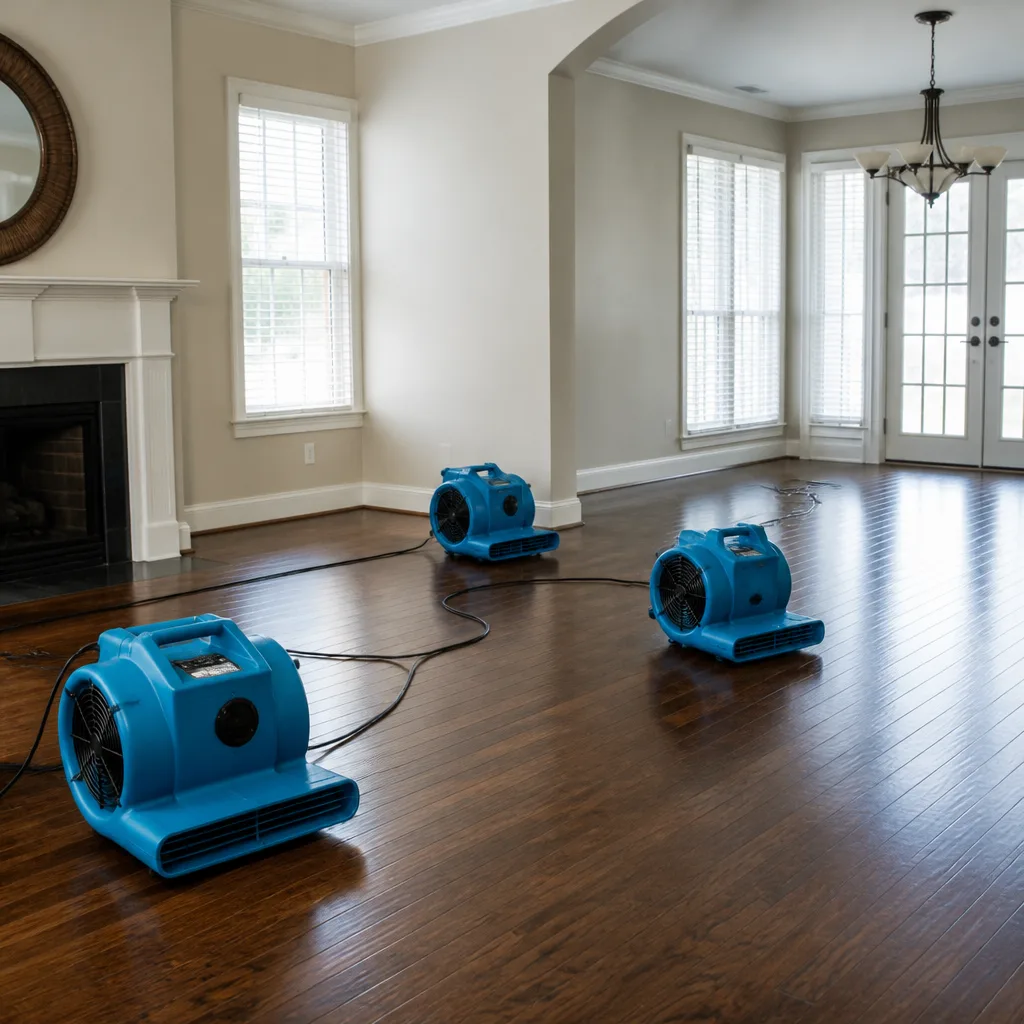
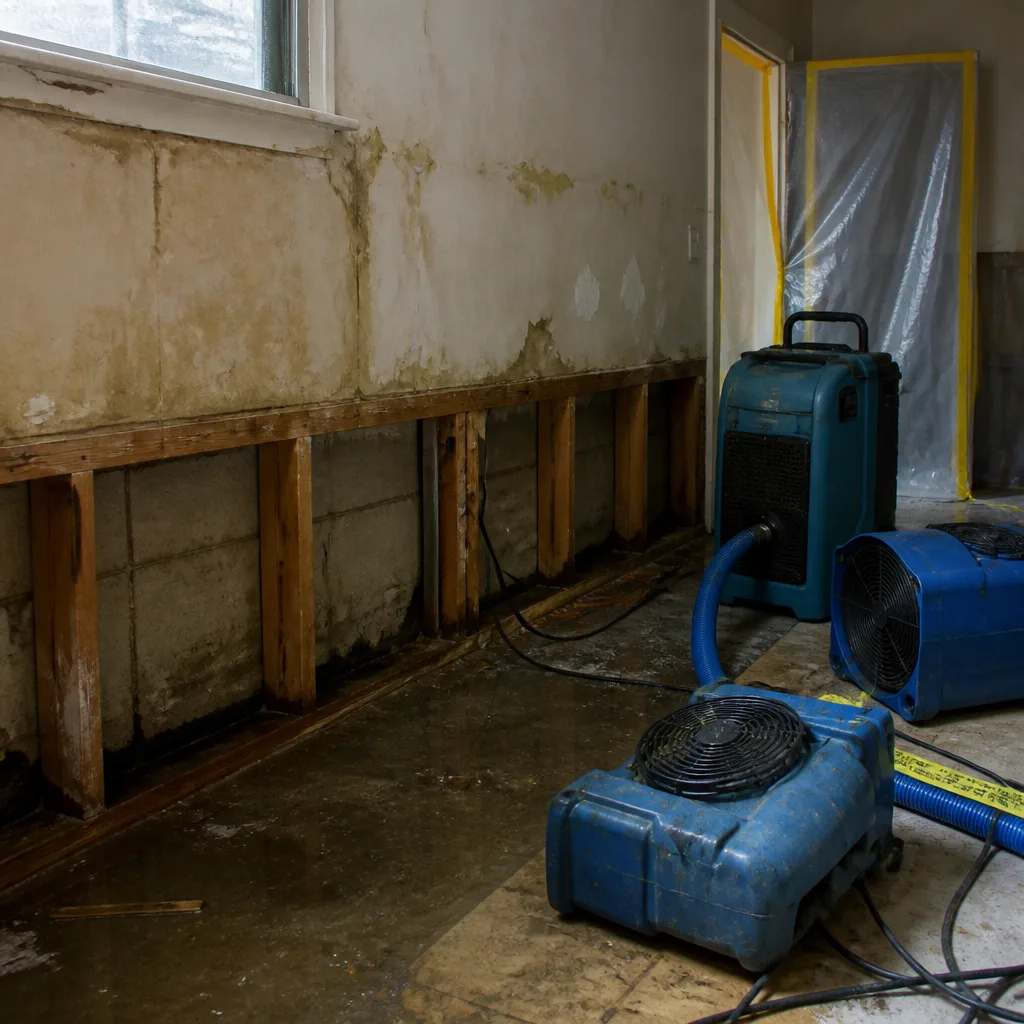
- Relying on a fan to dry out a water event. Household fans circulate room air but do not remove moisture from inside wall cavities or subfloors. Professional drying requires air movers, dehumidifiers, and moisture meters to verify that hidden spaces are dry.
- Assuming a small stain means a small problem. Water spreads horizontally before it becomes visible. A six-inch ceiling stain can represent a saturated floor joist system and wet insulation extending far beyond the stain’s edges.
- Waiting to see if the problem goes away. Water damage does not self-correct. It worsens with time as mold grows, wood deteriorates, and finishes delaminate. The longer the wait, the larger the restoration scope and the higher the final cost.
- Calling a general contractor instead of a restoration specialist. A general contractor can replace visible damaged materials, but cannot verify that hidden spaces are dry before rebuilding. Rebuilding over wet framing seals the moisture in, guaranteeing future mold and structural failure.
- Using bleach on mold without addressing the moisture. Bleach kills surface mold but does not prevent regrowth when the moisture source remains. Proper mold remediation addresses the moisture, removes contaminated materials, and verifies that remaining surfaces are dry and clean.
When to Call a Professional
Some warning signs warrant immediate professional attention. Call a restoration specialist if you see: water stains that appear after rain, a musty smell that persists despite cleaning, soft spots in flooring or walls, visible mold growth larger than a dinner plate, or water staining on the ceiling below a bathroom. Also call if you have had a recent water event, such as a leaking roof or overflowing appliance, and are unsure whether the affected area dried properly. Core water damage requires professional equipment and verification that hidden spaces are actually dry. Tidemark Water Damage Fort Worth offers free estimates in Fort Worth. Call (682) 703-9856 and a live person will answer, 24 hours a day.
When you call, we name what will be protected and how. For more guides & resources, see our blog. Shoe covers go on at the door. Drop cloths cover the floor before the first piece of equipment comes in. A written price is delivered before any work starts. And a photo of the clean-up is shared before the crew leaves, so you see exactly what was done and how it was left.
Frequently Asked Questions
You will typically notice one or more of these signs: a persistent musty smell, paint bubbling or peeling, baseboards separating from the wall, doors that suddenly stick, or discolored spots on walls or ceilings. In Fort Worth’s clay soil and humid climate, any of these signs indicates moisture trapped in the wall cavity, even when the visible surface feels dry.
Water damage usually smells musty, earthy, or damp, similar to a wet towel left in a hamper for days. In attics, the smell tends to be heavier and slightly sweet. In crawl spaces, it smells more like wet concrete or garden soil. Either smell means microbial growth has begun, which requires at least 24 to 48 hours of continuous wet conditions.
Water damage restoration in Fort Worth typically ranges from $1,200 to $4,500 for a contained event, such as a leaking supply line in a single room, to $8,000 or more for multi-room floods that require structural drying and reconstruction. The exact cost depends on the extent of water travel, the materials affected, and whether mold has developed. At Tidemark Water Damage Fort Worth, you receive a written price before any work starts.
Most homeowners insurance policies cover sudden and accidental water damage, such as a burst pipe or storm-driven roof leak. Gradual damage from long-term leaks may be excluded. We document every step of the restoration with photos, including a photo of the clean-up before the crew leaves, which helps with adjuster communication and insurance claims.
Tidemark Water Damage Fort Worth answers the phone live 24 hours a day, 7 days a week, and can typically dispatch a technician to your Fort Worth home the same day you call. Water damage does not wait for business hours, so neither do we. Call (682) 703-9856 for immediate assistance.
If water has entered wall cavities, subfloors, or ceiling voids, cleaning the visible surface will not solve the problem. Trapped moisture will support mold growth and structural deterioration behind the drywall. Full restoration means finding the tide mark, drying past it, and verifying that hidden spaces are dry before any rebuilding begins. That is the standard we hold, and the reason our 365-Day Done Right Promise exists: if it is not done right, we make it right.
The Bottom Line
The most expensive water damage in Fort Worth homes is the kind no one sees until it has already spread through the structure. By learning to read the quiet signals your house sends, paint bubbling without visible water, doors that stick seasonally, baseboards pulling away, musty smells that persistence despite cleaning, you can catch moisture problems before they become mold problems and structural failures. When you notice these signs, do not wait. The damage will not self-correct. Call a restoration specialist who chases the tide mark, not just the stain, and who gives you a written price before any work begins. Your home is telling you something. Learn to listen.
Written by Rick Sumner, Owner at Tidemark Water Damage Fort Worth, serving Fort Worth since 2006.
See the difference
 Before
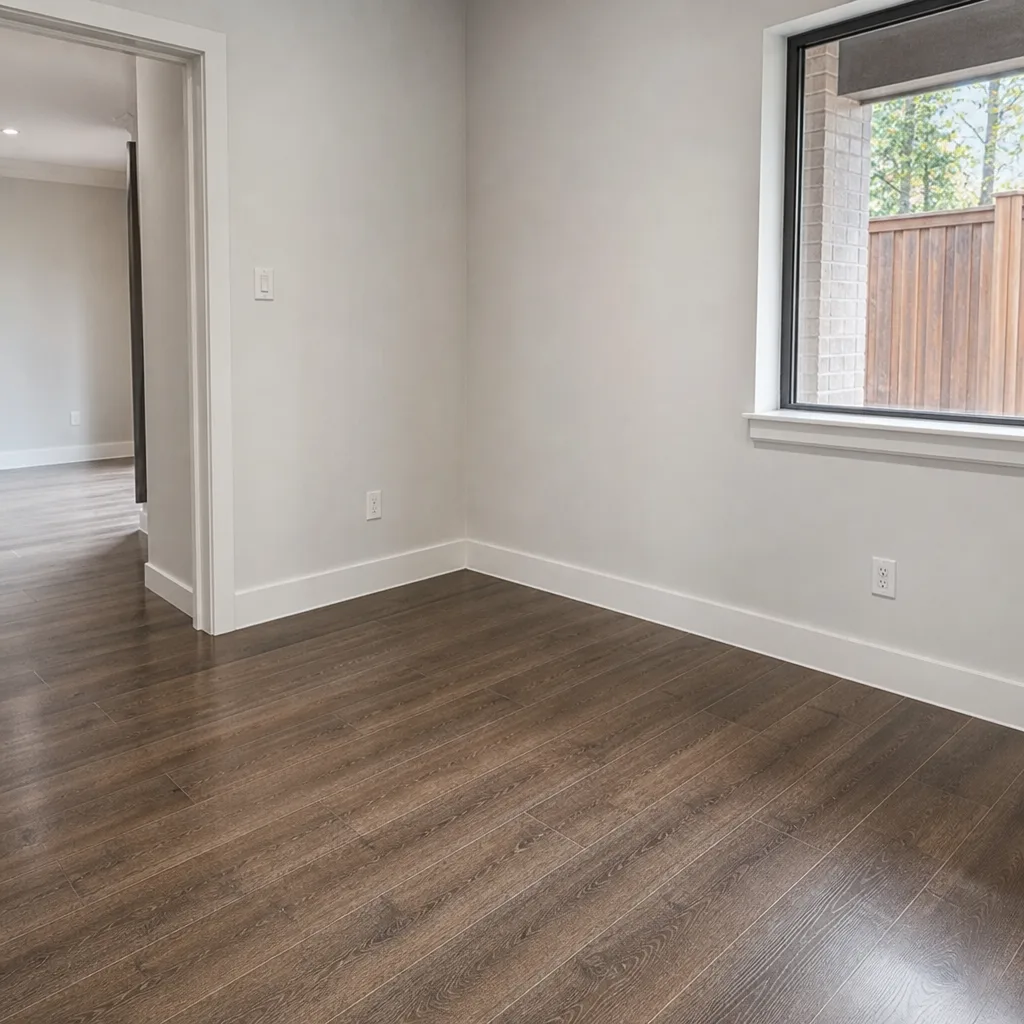 After
After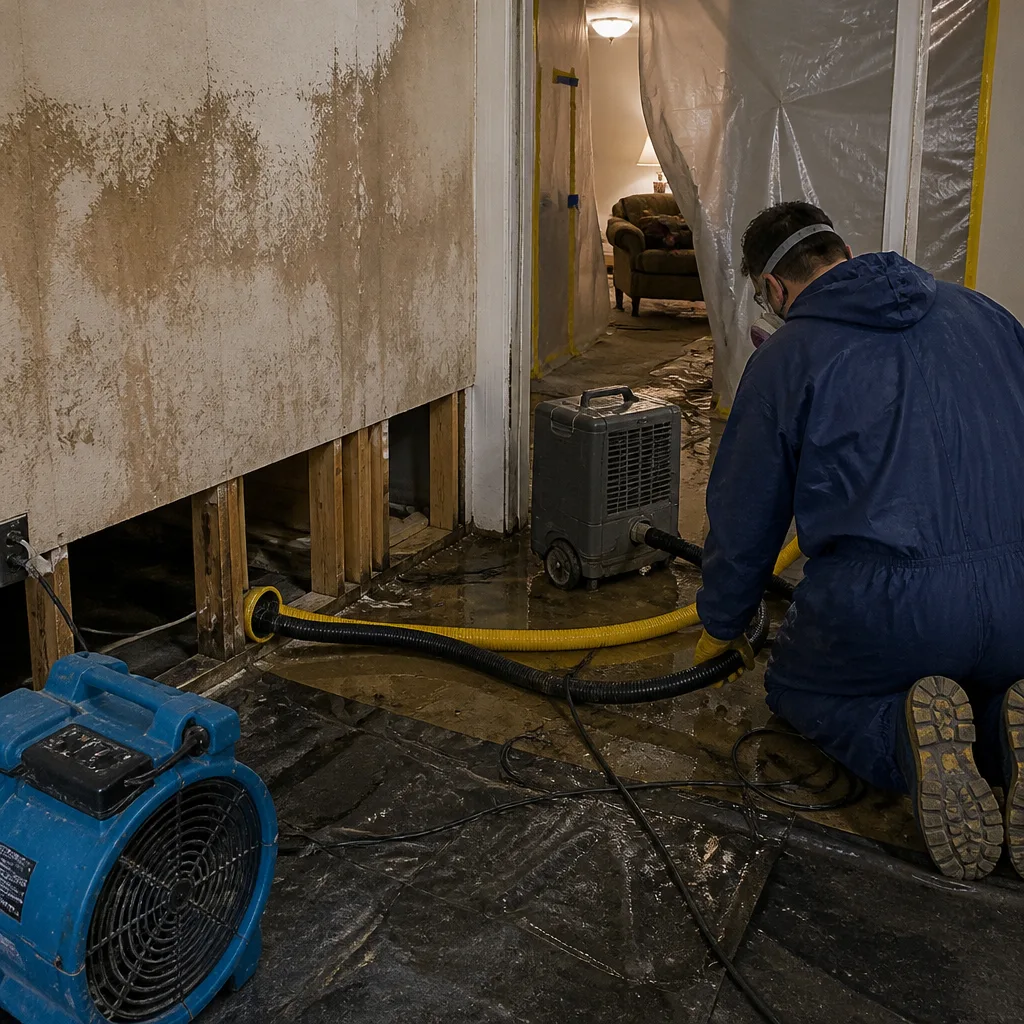 Before
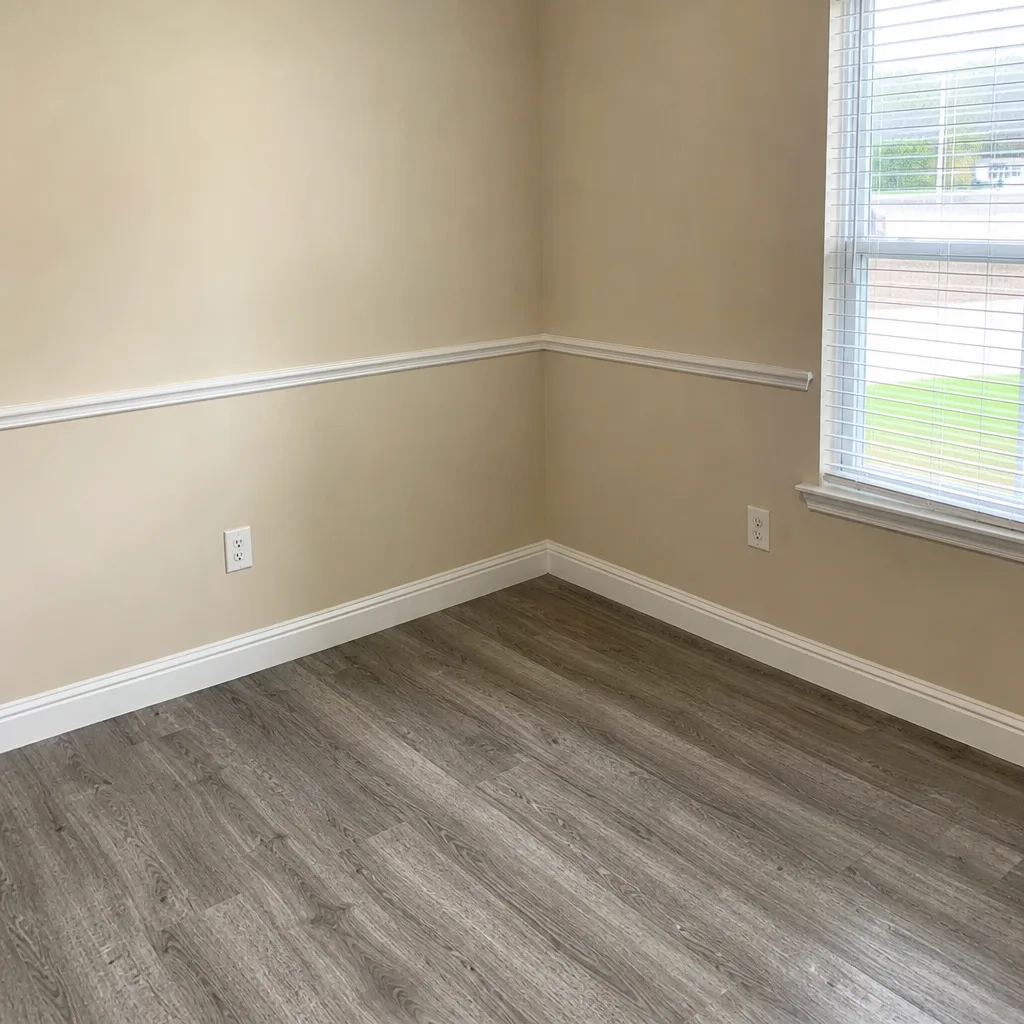 After
After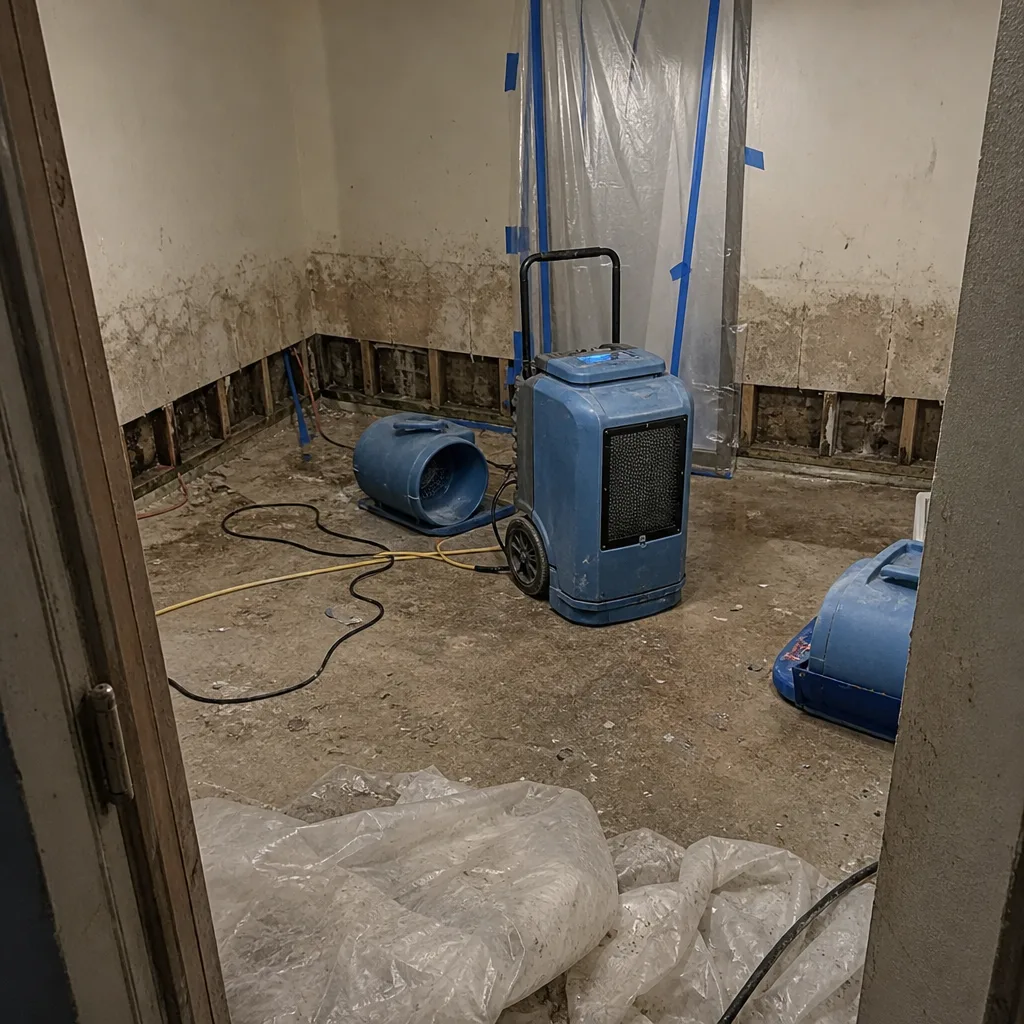 Before
 After
After