

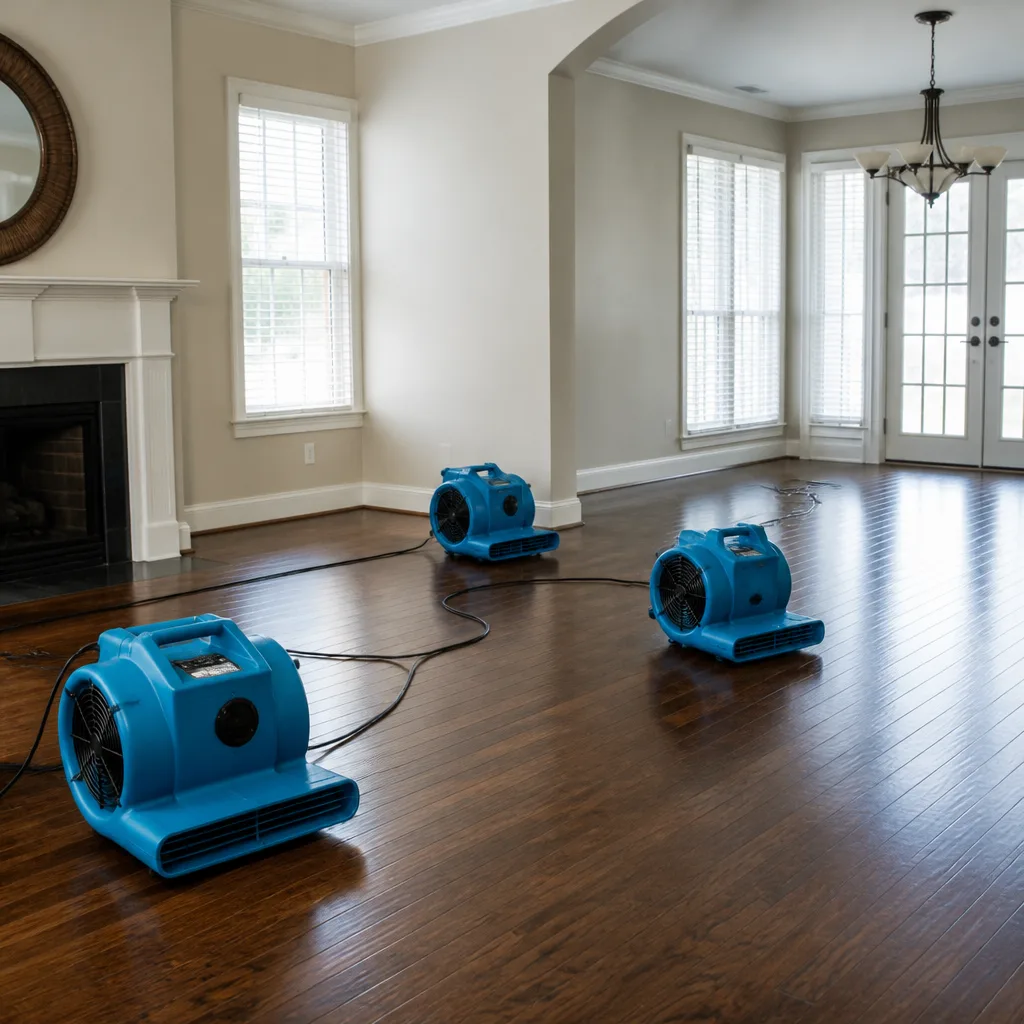
 Water damage drying
 Fire & smoke cleanup
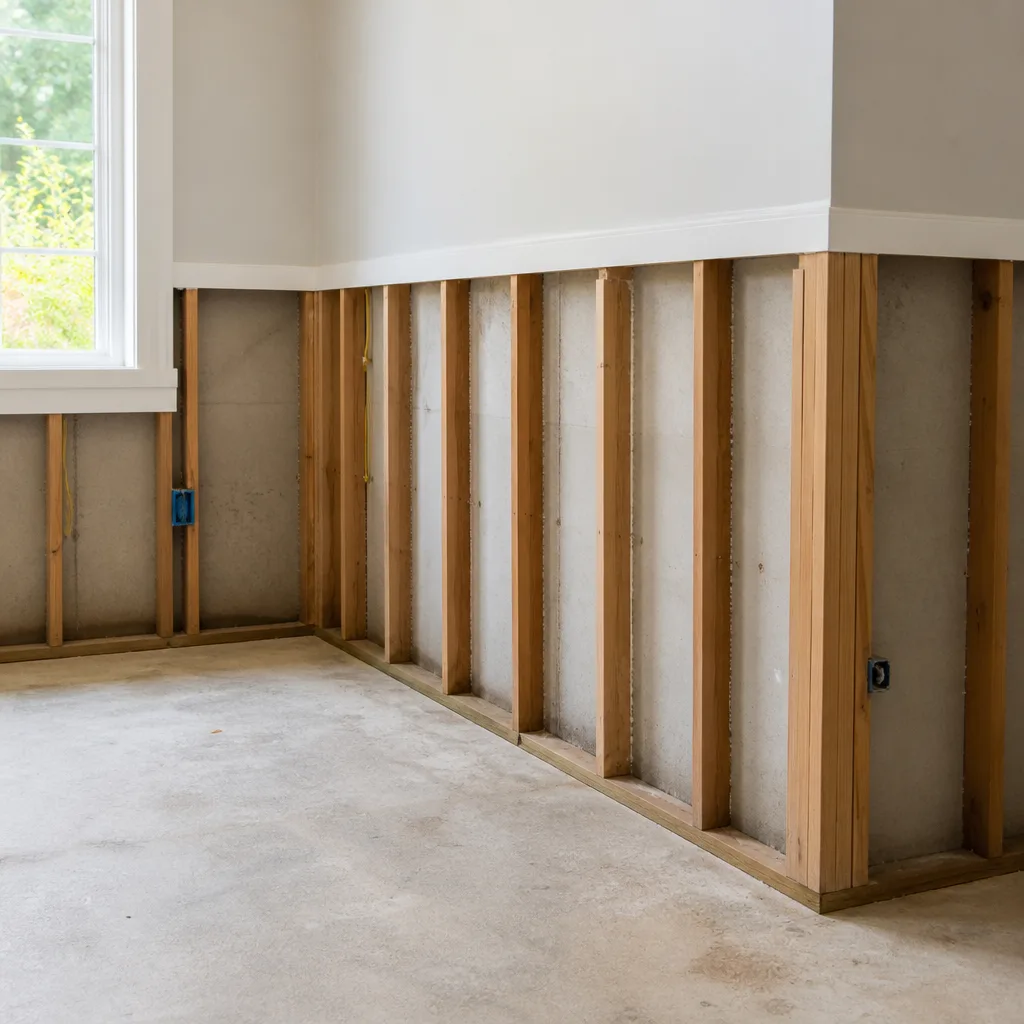 Mold remediation
 Storm response
 Sewage cleanup
 Reconstruction
Free visual inspection and a written scope of work before any mitigation begins - photos, moisture readings, and drying logs go in your claim file
The scope we write is the scope we bill. Anything new gets shown to you, in writing, before we touch it.
Get your free estimateFast, Reliable Mold Remediation Across Fort Worth
Mold remediation in Fort Worth typically runs $2,800 to $6,500 for a full containment and removal job, with inspections starting around $300. Most crews can be on-site within 24 hours of your call. If you’ve spotted dark staining along baseboards in Wedgwood, caught a musty smell in a Ridglea Hills hallway, or noticed ceiling discoloration after one of our spring hailstorms, you need someone who knows Fort Worth homes specifically – not a generic playbook. Call (682) 703-9856 and we’ll walk you through exactly what you’re seeing, what it costs, and what happens next.
Why Tidemark Water Damage Fort Worth Is Fort Worth’s Preferred Mold Remediation Company
We work the neighborhoods you live in. Mid-century brick veneer slab-on-grade homes in Wedgwood, Ridglea Hills, and Arlington Heights have a mold profile that’s different from anything you’ll find in Dallas’s pier-and-beam stock. When clay soil shifts under a slab and cast-iron drains crack, moisture feeds mold from below – and that changes how we inspect, contain, and dry your home. Our Mold Remediation technicians are IICRC-credentialed and arrive with truck-loaded containment, HEPA air scrubbers, and moisture mapping equipment already staged for Fort Worth slab homes.
Rick Sumner leads our team in Fort Worth. He’s seen the freeze-thaw pipe bursts in attics off Hulen, the wind-driven roof leaks after May storms in North Richland Hills, and the Category 3 backups from clay-shifted lines under Ridglea Hills slabs. Every job starts with a written price before any work begins. Shoe covers go on at the door. Drop cloths cover the floor before the first piece of equipment comes in. And you get a photo of the clean-up before the crew leaves. That’s the standard, on every job, no exceptions.
Restoration work we handle
Mold Inspection in Fort Worth
Mold Inspection in Fort Worth starts at $300 and includes moisture mapping, visual assessment, and air quality sampling where needed. Given Fort Worth’s slab-on-grade housing stock, we don’t stop at what’s visible on drywall or baseboards. We check for moisture wicking through concrete, look for signs of under-slab plumbing leaks, and map exactly where water has traveled before recommending any removal work.
Moisture Mapping Before Removal
In a 1950s Fort Worth brick veneer home, mold often starts beneath the slab, not on it. We use moisture meters and thermal imaging to trace water paths through concrete, behind baseboards, and inside wall cavities. Without this mapping, you risk removing visible mold while leaving the moisture source active – and that’s how mold comes back under your flooring in six months.
Air Quality Testing When It Matters
If you’re smelling mustiness but can’t see staining, air sampling tells us what’s airborne and where it’s coming from. This matters in Fort Worth’s humid summers, when interior moisture levels climb and hidden mold colonies release spores. We explain every result in plain language, and you get the written report before any remediation quote.
Mold Removal Specialist in Fort Worth
Mold Removal Specialist work in Fort Worth costs $2,800 to $6,500 for full containment, removal, and drying of a typical affected room. Smaller jobs like a single bathroom wall run $1,200 to $2,200. We set containment barriers before disturbing any colony, use HEPA air scrubbers during removal, and treat affected framing with antimicrobial agents where Category 3 water has been present.
Containment and Negative Air
Mold removal in a Fort Worth slab home means containing the work area so spores don’t spread to your living spaces during demolition. We set up negative air pressure with HEPA filtration, cut out affected drywall, and bag debris inside the containment zone. Your floors get drop cloths before equipment rolls in. Your kids’ toys get moved if they’re in the path – and we ask before we touch anything.
Post-Removal Drying and Verification
Fort Worth’s humid summers demand structural drying, not just surface drying. We run XPOWER and Phoenix dehumidifiers inside the containment zone until moisture readings return to pre-loss condition, then re-test before we rebuild. You see the moisture meter numbers. You get a photo of the cleaned area before we pack out. And you know exactly what was removed and what was treated.
Trusted Brands We Service in Fort Worth
We stock common replacement parts and filters in our Dallas-Fort Worth office, so we can usually begin containment and drying the same day a Fort Worth homeowner calls. For decking, drywall, and framing materials after mold-damaged areas are cut out, we know what’s on hand locally in Fort Worth. The equipment we run includes Dri-Eaz air movers, XPOWER dehumidifiers, Phoenix moisture meters, and B-Air scrubbers – not rented from a big-box counter, but maintained and calibrated by our own technicians. For Fort Worth slab homes, that means we can start moisture mapping quickly without waiting on out-of-state gear.
See the difference
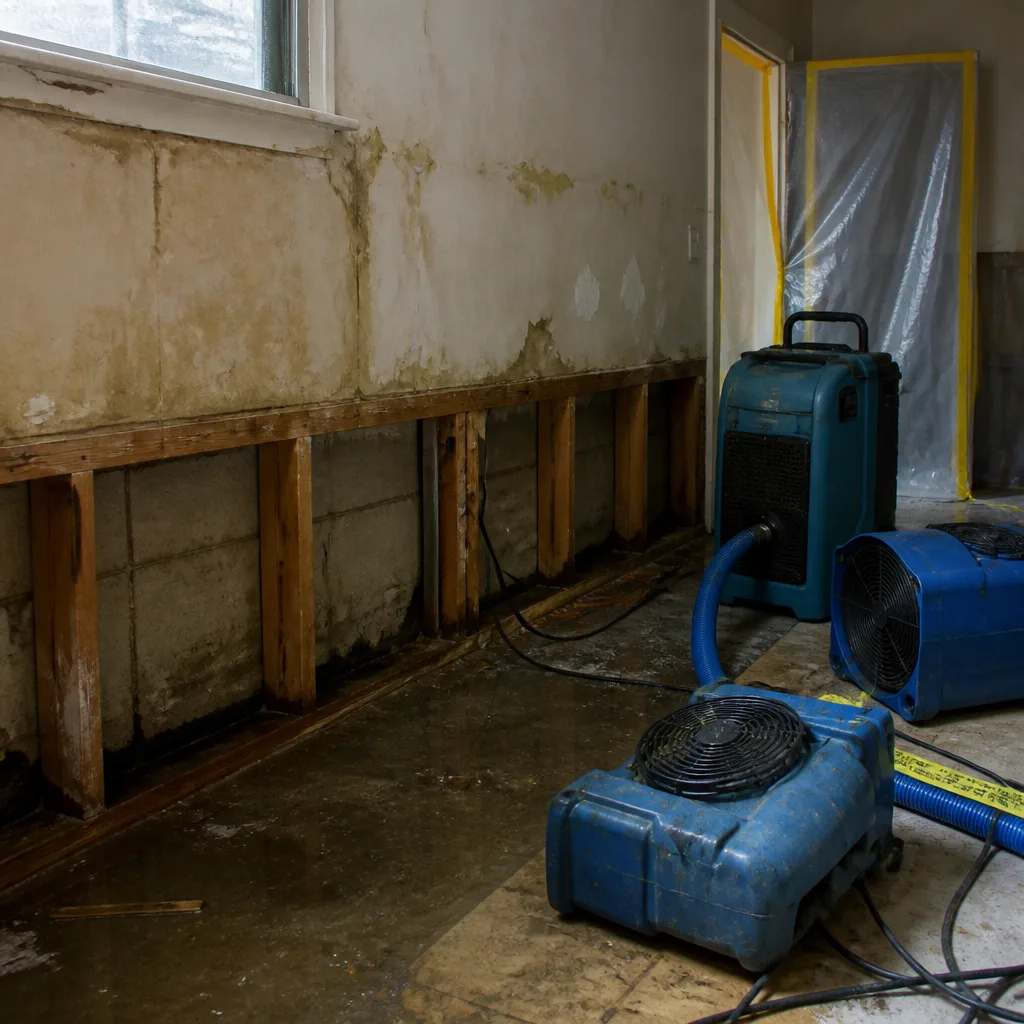 Before
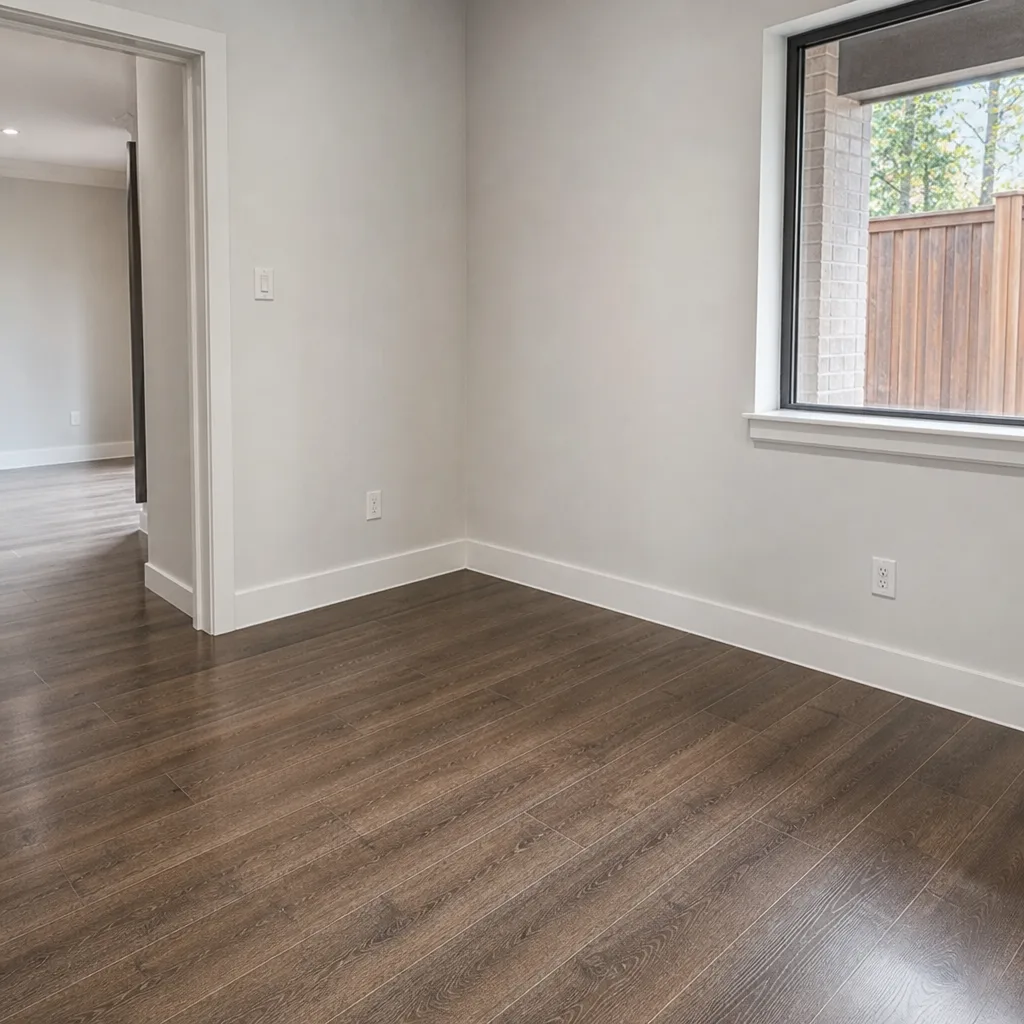 After
After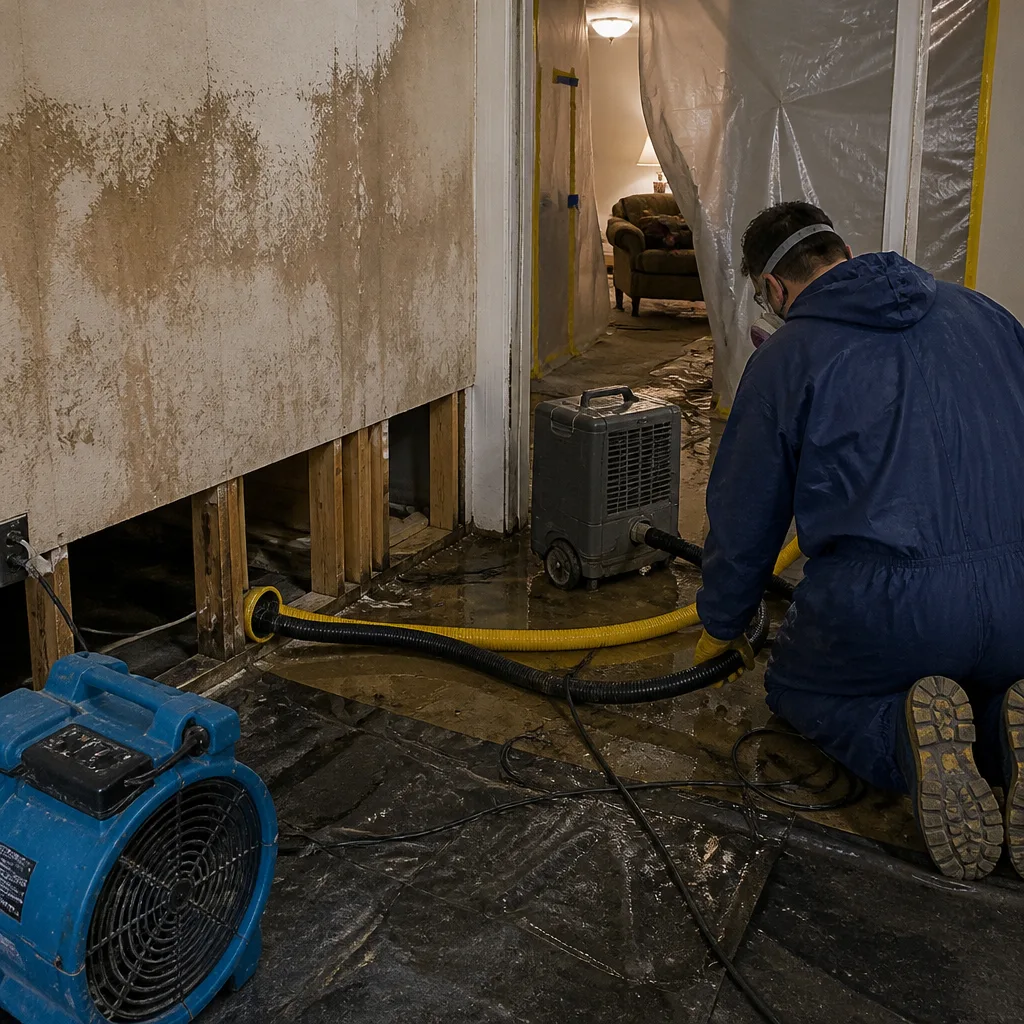 Before
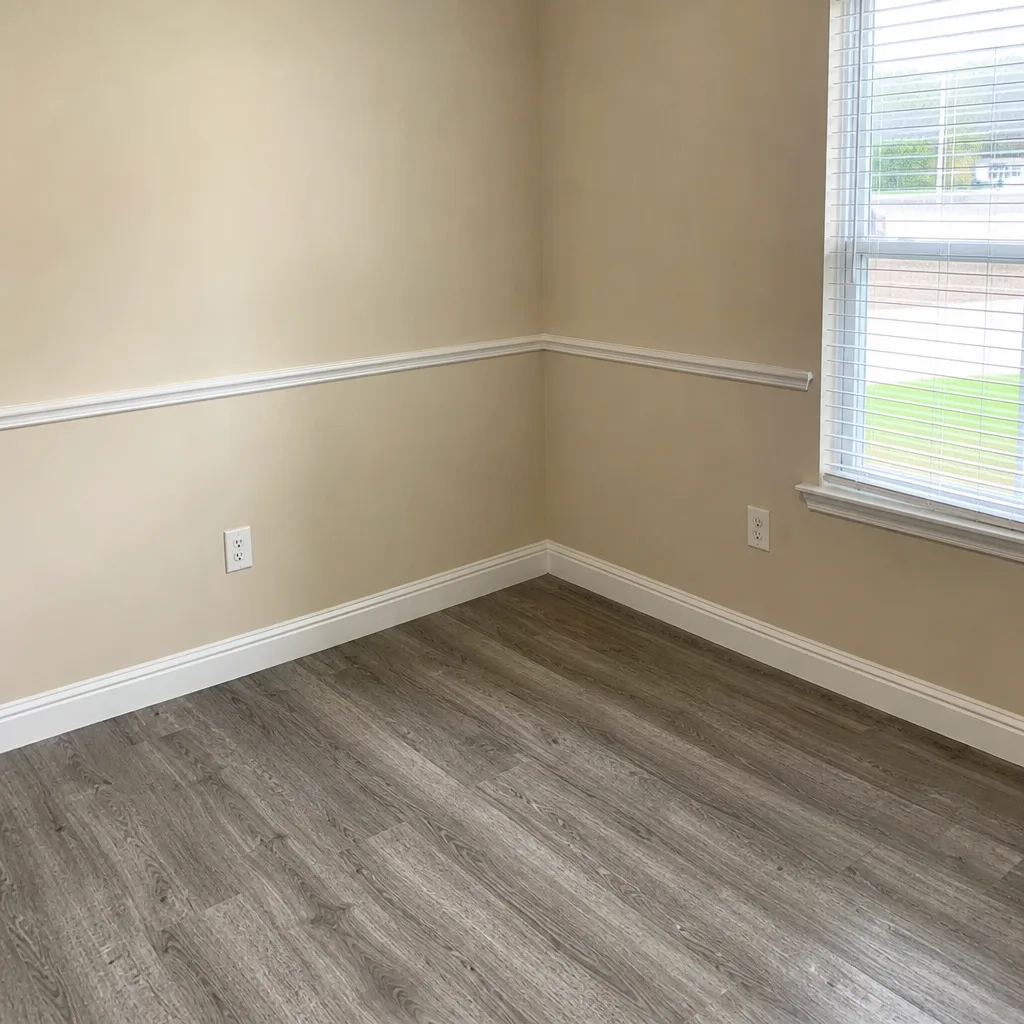 After
After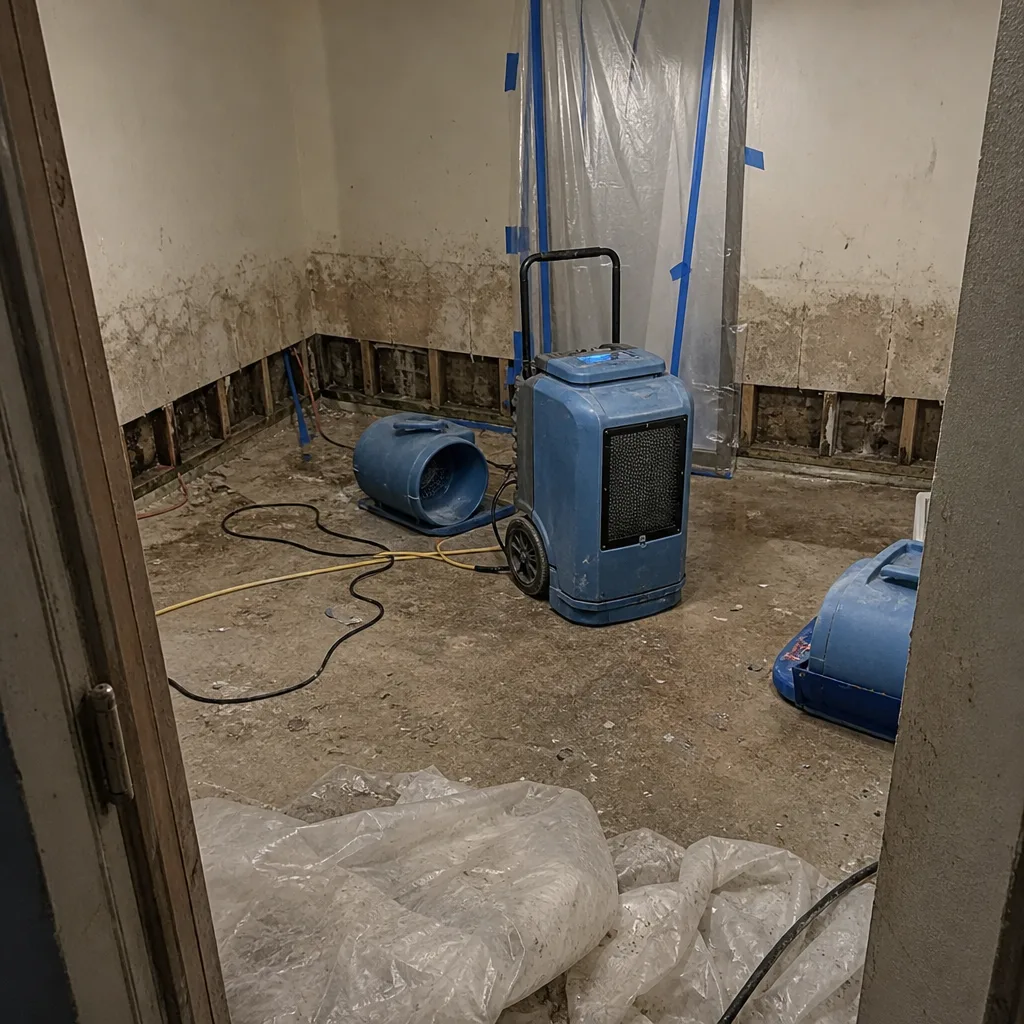 Before
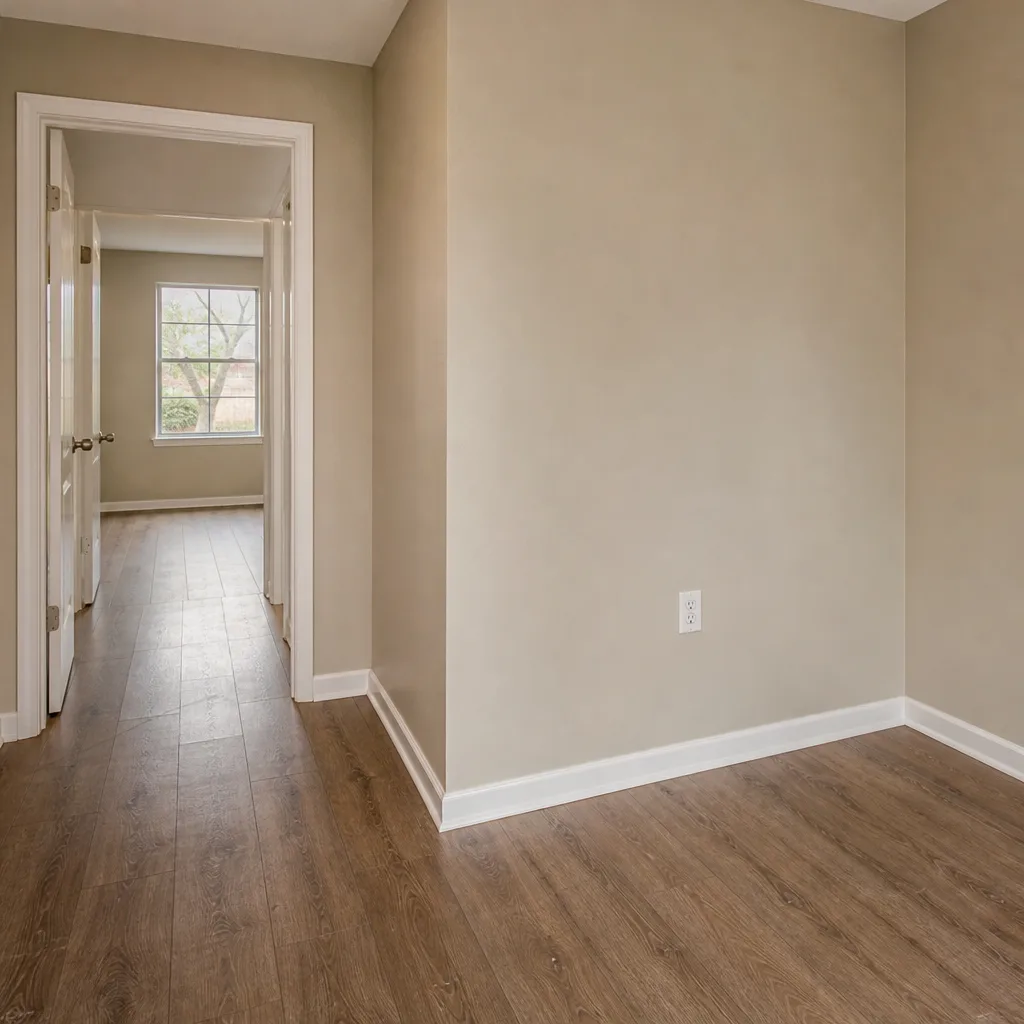 After
AfterCommon Mold Remediation Problems We See in Fort Worth Homes
- Under-slab moisture from cracked cast-iron drains. In neighborhoods like Ridglea Hills and Wedgwood, original cast-iron drain lines under slabs crack as clay soil shifts. Sewage and grey water then migrate under the concrete, feeding mold from below long before you see it on flooring.
- Freeze-thaw pipe bursts in poorly insulated attics. Fort Worth’s winter freeze-thaw cycles cause pipes in older attic spaces to split. Melt water runs down wall cavities and into ceilings, and mold takes hold within 48 to 72 hours if drying isn’t started properly.
- Wind-driven roof leaks after hailstorms. Hail and severe thunderstorms peel shingles and crack flashing, letting water into attic sheathing. Moisture trapped in attic insulation during a hot Texas summer creates a hidden mold reservoir that spreads into ceiling joists.
- Humidity-driven mold in slab-on-grade closets and bathrooms. Fort Worth’s humid summers push interior relative humidity up in homes where HVAC systems are oversized or undersized. Closets against exterior slab walls collect condensation, and mold grows on drywall and trim without any leak at all.
Pricing for Mold Remediation in Fort Worth, TX
Here’s what to expect in Fort Worth’s market. Mold inspection with moisture mapping runs $300 to $500. A single-room remediation with containment, removal, drying, and antimicrobial treatment typically lands between $2,800 and $4,500. Full-home or multi-room jobs in larger slab homes run $5,000 to $8,000, depending on square footage, how much drywall comes out, and whether structural drying requires removing flooring. What factors change the number? How far the water traveled under the slab, how many rooms need containment, and whether we’re coordinating with your adjuster for Category 3 sewage backups. You’ll see the written price before any work starts. Call (682) 703-9856 for a free estimate.
We Also Serve Cities Near Fort Worth
Beyond Fort Worth, our crews regularly work in Haltom City, North Richland Hills, Colleyville, and Arlington. If you’re in one of these surrounding communities and dealing with mold from a slab leak or storm damage, the same written-price promise and 365-Day Done Right Promise apply. Fort Worth remains our primary service area, and we schedule local dispatch through our Dallas-Fort Worth office.
Serving Fort Worth, TX - Our Local Coverage Area
We’re based in the Fort Worth area and know this community well. Use the map below to see our service coverage - if you’re nearby, we can almost certainly help.
FAQs About Mold Remediation in Fort Worth
Fort Worth’s expansive clay soils shrink and swell with moisture changes, which puts constant pressure on under-slab plumbing. That pressure cracks cast-iron drain lines in slab-on-grade homes, and sewage or grey water slowly leaks into the soil beneath the concrete. In Dallas, where many older homes sit on pier-and-beam foundations with crawl spaces, leaks reveal themselves quickly and dry by airflow. In Fort Worth, the moisture stays trapped under the slab, wicking upward into flooring and baseplates, feeding mold for weeks or months before you ever see staining. That’s why our Fort Worth inspections always include sub-slab moisture mapping. Call (682) 703-9856 if you suspect a slab leak – we’ll explain the mapping process and give you a written quote before starting.
Yes, in many cases. Most Texas homeowners policies cover mold remediation when the mold results from a covered peril like a sudden sewage backup or burst pipe. What matters is documentation: photos of the damage, a damage assessment that shows exactly where the water traveled, and a clear scope of work. We help you through it by providing photo documentation and working directly with your adjuster. We’re a restoration company, not a public adjuster, but we can tell you plainly what your policy likely covers and what it likely doesn’t. Call (682) 703-9856 and ask for Rick Sumner – he’ll walk you through whether an adjuster should visit before we start cutting.
Start within 48 to 72 hours if you can. That’s the window before mold colonies become established in drywall, insulation, and framing. In Fort Worth’s humid spring and summer months, that window can shrink – warm attic air combined with moisture from a hail-damaged roof creates ideal mold conditions faster than in drier climates. If you’ve already spotted staining on ceilings or in attic sheathing, the mold has likely been developing for a week or longer. We respond to Fort Worth homes within 24 hours of your call. Call (682) 703-9856 and we’ll schedule a moisture assessment, document the leak source, and give you a written plan.
Category 2 grey water contains significant contamination – it’s water from washing machines, dishwashers, or clean toilet overflows with some level of bacteria or chemicals. When a slab leak releases grey water under a Fort Worth home, it saturates the soil and wicks into concrete, baseplates, and flooring. For remediation, that means we treat affected materials with antimicrobial agents after cutting out wet drywall and before drying begins. In a Category 2 situation, we also typically recommend more aggressive moisture mapping to find every path the water took through the slab. Call (682) 703-9856 and we’ll explain what category you’re dealing with and what the written scope includes.
Because in a 1950s Fort Worth brick veneer slab home, the moisture source is often under the slab, not in the wall. If you remove visible mold without mapping where the water came from, you’re treating the symptom. Six months later, the same moisture path feeds new mold growth behind new drywall. Moisture mapping uses meters and thermal imaging to trace exactly where water has traveled through concrete, framing, and wall cavities. In Ridglea Hills, our crew tackled a Category 3 black water backup from a cracked cast-iron drain line under the slab. We set containment, packed out affected contents, and used Dri-Eaz air movers with XPOWER dehumidifiers after cutting out wet drywall – moisture readings dropped to pre-loss condition within four days. That’s what proper mapping does for a Fort Worth slab home. Call (682) 703-9856 for a free assessment.
Written by Rick Sumner, Owner at Tidemark Water Damage Fort Worth, serving Fort Worth and surrounding communities.